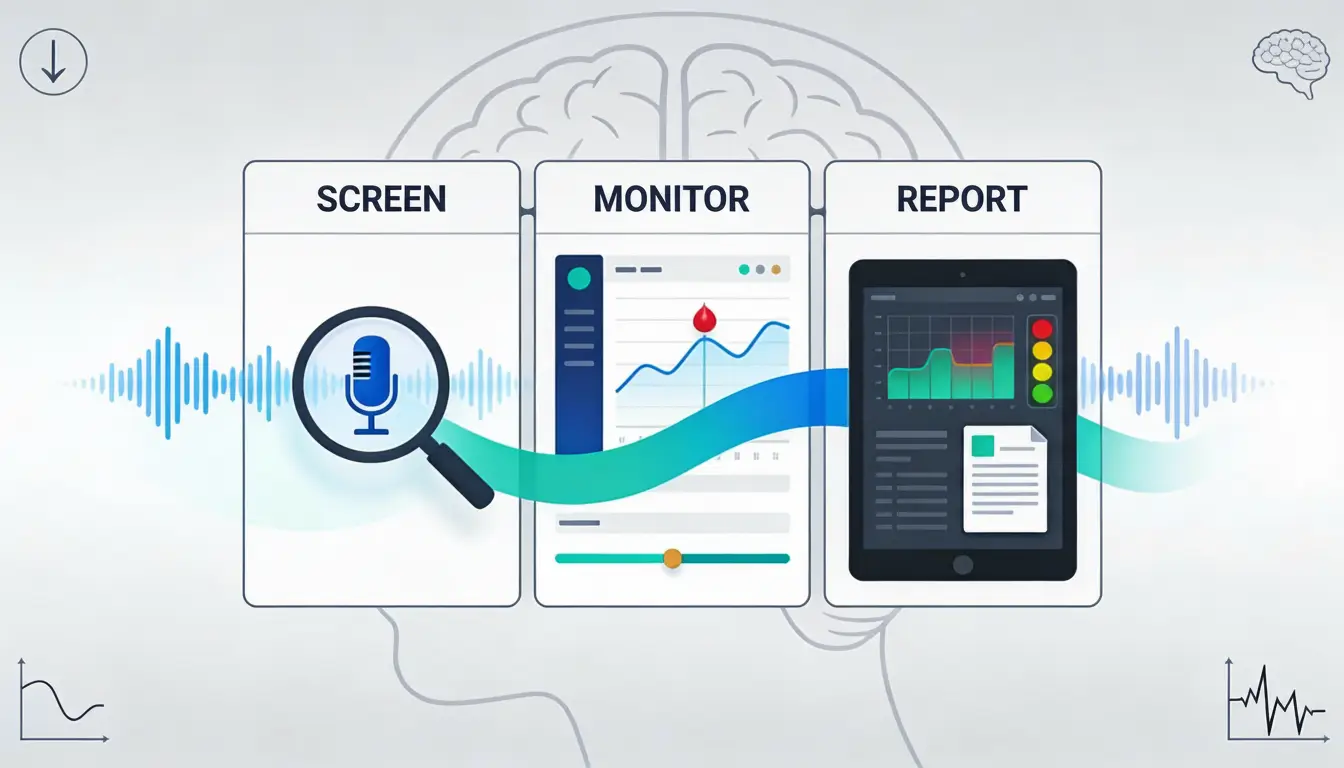
Non-verbal voice biomarkers analyze acoustic patterns like tone, pitch, rhythm, and micro-pauses to detect early signs of depression, anxiety, PTSD, or cognitive decline—often before symptoms appear. In this early adoption phase, a structured Standard Operating Procedure (SOP):Screen, Monitor, Report provides the essential framework for mental wellbeing programs, ensuring seamless integration into workplaces, clinics, and research.
Why Voice Biomarker SOP Drives Mental Health Change Management
Emerging voice biomarker technology requires clear protocols to build trust and overcome adoption barriers. The Screen-Monitor-Report SOP delivers scalable, privacy-first, non-invasive architecture, converting voice data into actionable mental health screening insights for employers, clinicians, and teams. This standardized approach minimizes errors, optimizes resources, and scales employee mental wellness without stigma.
Screen SOP: Non-Invasive Voice Biomarker Detection
Purpose:
Launch early mental health screening using AI-powered analysis of short voice clips from any device.
How Voice Biomarker Screening Works:
- Capture 25-30 second voice prompts during routine calls, apps, or recruitment processes.
- AI extracts biomarkers signaling stress, bipolar disorder, dementia, fatigue, or Alzheimer’s precursors.
- Generate real-time risk flags without overwhelming mental health professionals.
Implementation Tip:
Schedule weekly voice biomarker wellness check-ins to establish population baselines, prioritizing high-risk individuals for intervention.
Monitor SOP: Continuous Mental Fitness Tracking
Purpose:
Centralize voice biomarker data for trend analysis, personalized reports, and proactive anomaly detection.
Voice Monitoring Process:
- Create unit-level dashboards for longitudinal vocal pattern analysis.
- Configure customizable triggers (e.g., pitch variation >15% week-over-week).
- Produce personalized mental fitness reports correlating vocal shifts with anxiety or cognitive changes.
Pro Tip:
Deploy anomaly alerts for early intervention—such as peer support recommendations—reducing escalation times by 50%.
Report SOP: Data-Driven Mental Health Decision Making
Purpose:
Transform voice biomarker insights into actionable heatmaps, policies, and research advancements.
Reporting Workflow:
- Generate multi-dimensional analytics: organization-wide heatmaps, individual progress tracking.
- Support evidence-based policy development for workplace mental health programs.
- Enable R&D through anonymized datasets for voice biomarker model refinement.
Leadership Tip:
Deliver quarterly executive summaries demonstrating ROI from voice biomarker-driven wellbeing initiatives.
Voice Biomarker SOP vs Traditional Methods: Key Differentiators
The Screen-Monitor-Report SOP outperforms legacy mental health screening approaches:
| Feature | Traditional Methods | Voice Biomarker SOP |
|---|---|---|
| Detection | Symptom surveys | Predictive AI acoustic analysis |
| Invasiveness | Clinical interviews | 30-second clips, stigma-free |
| Scalability | Limited cohorts | Enterprise-wide, device-agnostic |
| Privacy | Complete data storage | Anonymized biomarkers only |
| Results | Days/weeks | Real-time insights |
Voice Biomarker SOP Implementation Roadmap
- Team Education: Conduct 30-minute voice biomarker SOP training sessions.
- Pilot Program: Test Screen phase with one department before full rollout.
- Success Metrics: Track early interventions, engagement rates, and accuracy improvements.
- Continuous Optimization: Refine detection thresholds using organizational data.
About Manodayam: Precision Psychiatry Innovation
Manodayam pioneers AI-driven mental wellness through its integrated stack—Manovak for voice biomarker screening, Manovak API for seamless app integrations, and Manolytics for advanced analytics dashboards. Focused on precision psychiatry and employee wellbeing, Manodayam empowers organizations, researchers, and clinicians with privacy-first, scalable tools to screen, monitor, and report mental health proactively. Join our ecosystem partnerships to co-build the future of accessible mental health solutions